“I Thought I Would Break the Phone" -
What First-Time Smartphone Learners Teach Us About Digital Inclusion.
5th July 2026 3 mins Digital Skills Training
APOORVA SRINIVAS
Conversations with women textile workers reveal that the biggest barrier to digital inclusion is not access to smartphones, but the confidence to use them independently.
Over the past few weeks, I spoke with 22 women employed in textile mills about how they use their smartphones. Almost everyone owned one. Most used WhatsApp and YouTube regularly. But as the conversations unfolded, a different picture emerged - one that went beyond smartphone ownership.
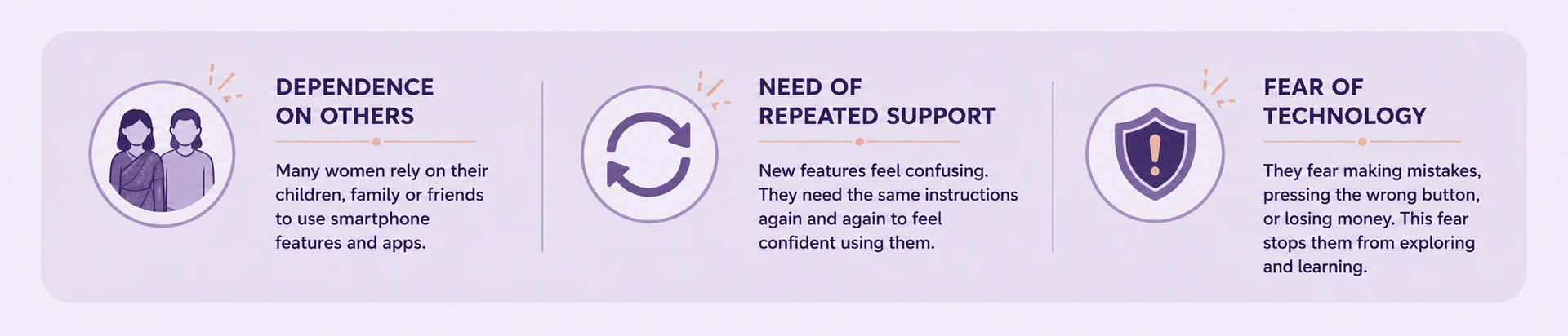
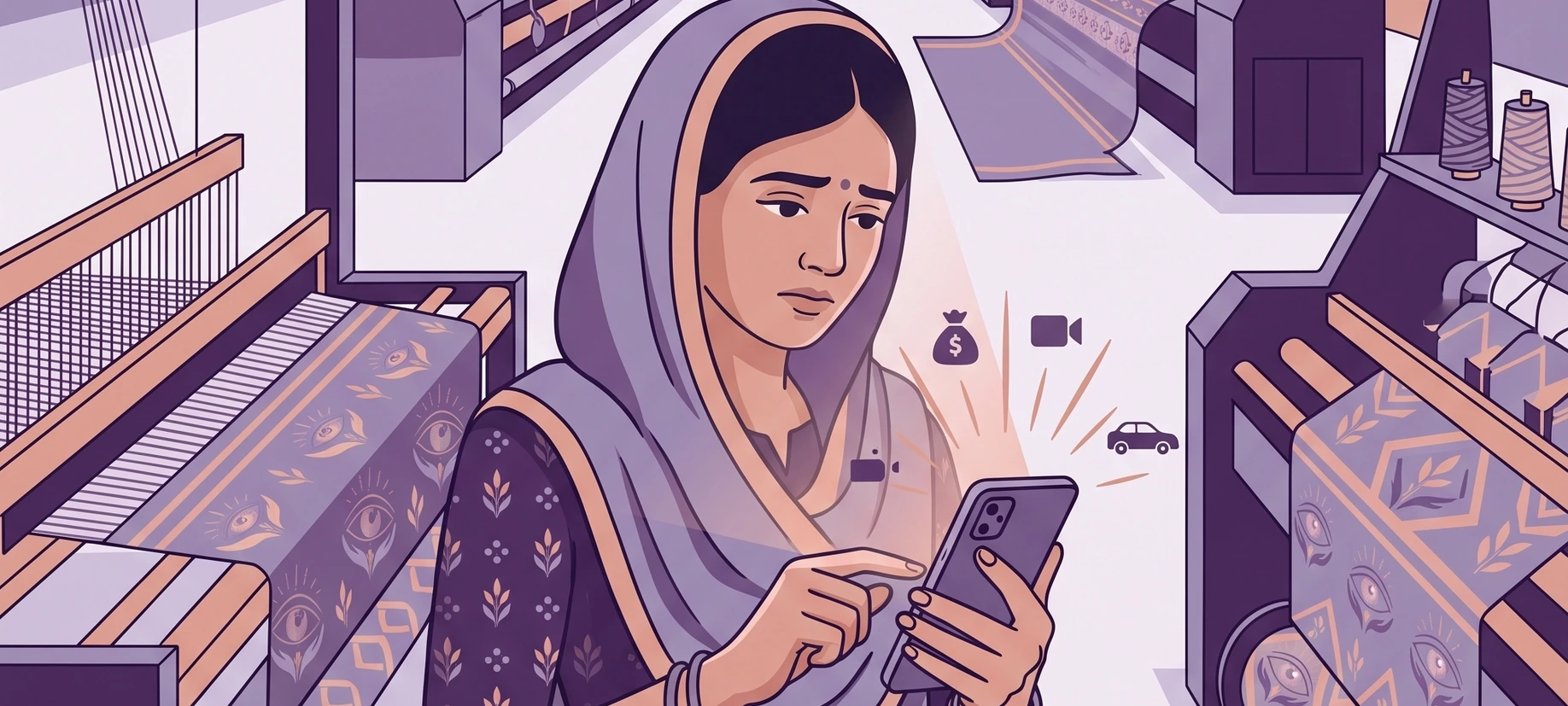
One woman summed it up in a sentence I couldn't forget: "I thought I would break the phone." She wasn't talking about physically dropping it. She meant that every tap felt risky. Every unfamiliar button carried the fear of making an irreversible mistake. That fear echoed through almost every conversation.
"I don't know anything on my smartphone," said a 45-year-old woman, laughing. Beside her, a 55-year-old woman nodded and laughed too. The room joined in. Behind the laughter, however, was a shared feeling of uncertainty about using digital technology. For most of the women, WhatsApp was used mainly for audio and video calls, while YouTube served primarily as a source of entertainment, digital engagement was limited.
Only two women used UPI applications such as Google Pay, and even they were hesitant. The fear of learning the technology and committing mistakes was the common concern.When asked about features such as checking transaction history or managing payments, most were unfamiliar with them. A similar pattern emerged with mobility applications. Only two women had used Uber Auto. While they could book a ride, they struggled with entering locations accurately or sharing their live location.
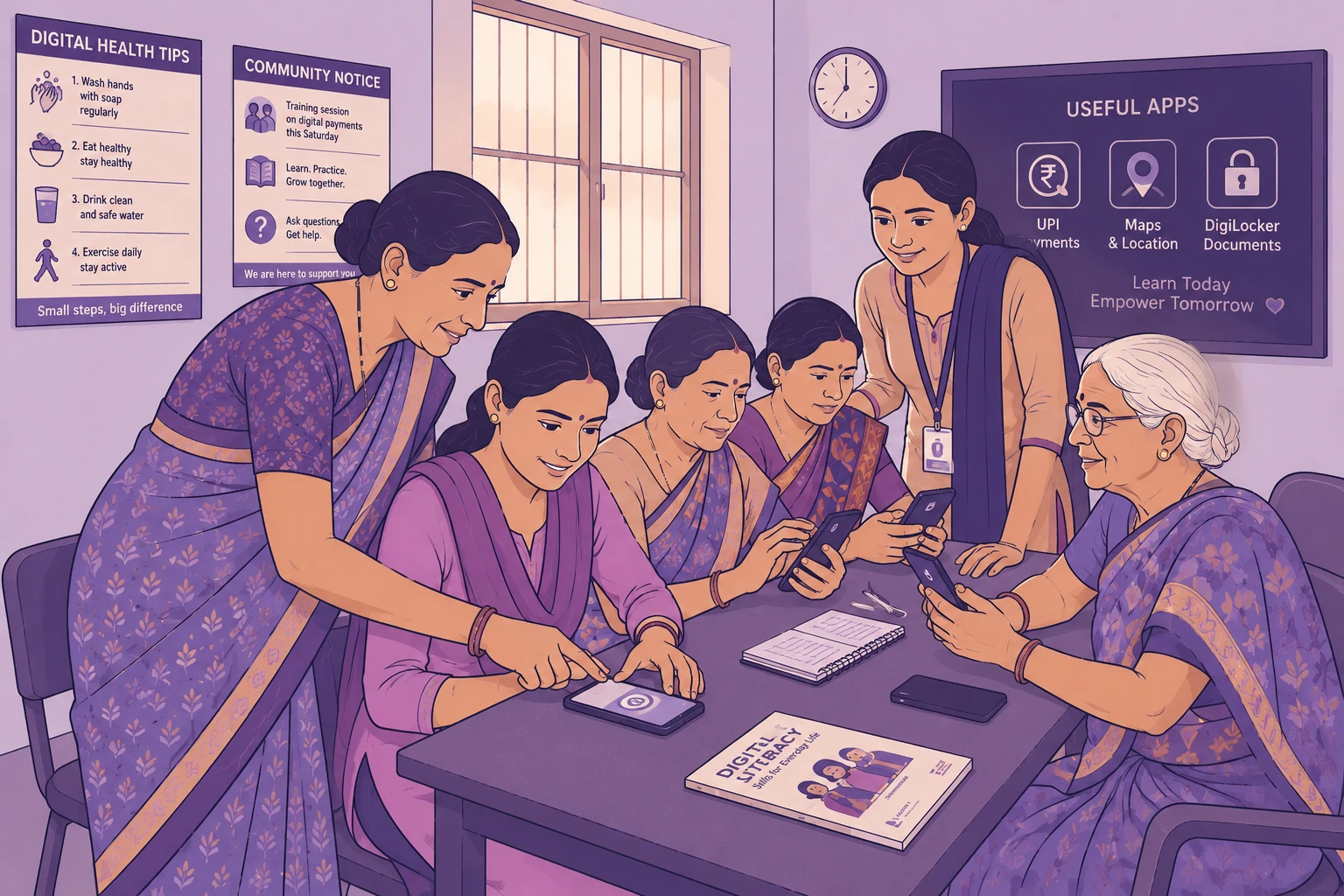
What stood out most was not the lack of access, but the lack of confidence. Many women depended on their children to teach them how to use new features on their phones. None of the women knew how to use a document scanning app. Most had never used Google Search independently. Google Maps, location sharing, and DigiLocker were unfamiliar tools.
Yet the desire to learn was unmistakable.
When asked what they wanted to learn, the answers were practical and rooted in everyday needs: typing faster, using Google Pay confidently, and becoming less dependent on cash and loose change. These conversations reminded me that they want to use technology for making daily life easier and more independent. A device in hand does not automatically translate into digital confidence. Between access and empowerment lies a crucial gap - the confidence to explore, learn, and use technology independently.
And perhaps that is where the real work begins.